The Punta de Tarifa that juts out just south of Tarifa town is the official southernmost point in mainland Europe. That’s important because it marks the spot where the Spanish south coast starts facing the open Atlantic Ocean. Anyone who knows Tarifa will tell you that surfing sans kite or sail here isn’t all that popular. But there are days when the knots die down and the waters shape up to make it great for surfers. Plus, those Levante wind systems are from the east, which is offshore on all of the major surf beaches that string the region from Tarifa going north, along what’s called the Costa de la Luz. It’s best to view Tarifa as one end of a 60-mile run of Atlantic shoreline that links the punta to the town of Cadiz.
Spot principali e livello delle onde
Tarifa’s obsession with wind-powered wavecraft has meant that traditional surf has taken a back seat here. But that’s slowly, surely changing, with some new surf schools that are beginning to realise the potential of a region that’s very beginner friendly, super laid back, and just as consistent as the Portuguese Algarve.
Tarifa is located on the southernmost tip of mainland Spain, in the province of Cádiz, Andalusia. It faces the Strait of Gibraltar, which separates Spain from Morocco. The location is key for surfers because it means you’ve got exposure to eastern winds - levant winds - and Atlantic swells. That’s unique for just about anywhere on the Spanish south coast. The closest major airport to Tarifa is Jerez Airport (XRY). It’s about 90 minutes to two hours’ drive away. Other nearby airports include Gibraltar International Airport (GIB) and Málaga-Costa del Sol Airport (AGP).
Tarifa has urban breaks at Balneario, along the Punta Tarifa, and Los Lances. But, really, we get excited for this region for the upcoming beginner and intermediate beaches that stretch north, all the way to El Palmar and Cadiz. El Palmar is on the rise as a surf destination. It gets very similar easy beach breaks to much of the Algarvian coast over in Portugal, and there’s a growing cohort of excellent surf camps here. Waves are very accessible, all beach break, with the potential for trips out to peeling points further south if you’re slightly more advanced.
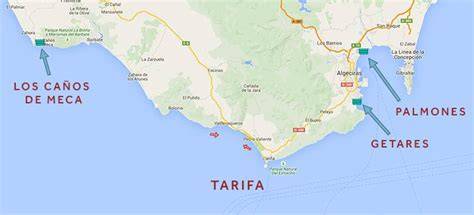
Le spiagge principali
Zahara is one hell of a long beach. 80% of that is nothing but low-quality grurglers that are no fun to surf at all. Most of the time they break and just fall to mush, regardless of the wind. But there are some sections here that work pretty darn good, usually at the point where sandbanks have formed around the mouth of a small river. You can either go hunting for those locations yourself or throw in with the people in the know - Zahara Surf School is highly rates, runs daily courses and surf guiding, and was one of the first in the Cadiz region.
Playa Bolonia is a gorgeous spot, with wispy white sands emerging from empty dunes. Because it has a big, rocky headland poking out on its north side, it can only get W or SW swells, or needs seom serious size in the winter NW channel. In a region that’s not got much in the way of nice, peeling point breaks, Punta Paloma is a breath of fresh air. When it’s on, it reminds us of something out of Noosa, or a mini Imsouane, though generally fatter and more crumbly. You will need a car to get here but there’s a good chance you’ll be totally alone since it’s the most remote part of the shoreline between Tarifa and Cadiz. On a mid-high or dropping tide, there’s a decent spot right in front of the Hurricane Hotel that’s taken the same name. Breaks over a series of cobblestone and reef beneath, so bring booties. The wave does nicely with a bit of size on it but won’t hold after 8 foot for sure.
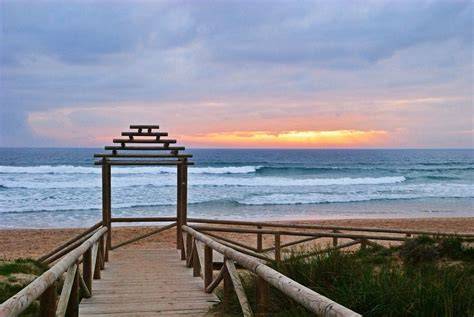
If you’re planning on surfing in Tarifa and either don’t want to leave the town itself or won’t have access to a rental car, then Los Lances is going to be your main playground. The most accessible part of the beach is Los Lances South. That’s the urban beach and it’s basically classic beach break all the way along. The best peaks are usually a little to the north, because W and SW swells can be cut down by the Punta Tarifa, meaning there’s extra punch as you head up the strand. A lot of the quality here will depend on how the sandbanks are sitting. When they’re good, they accumulate at a slight diagonal off the mouth of the river, which creates some longish rights that push southwards off the estuary. For a bit more action, you can push north to Los Lances Norte. That’s over the river mouth and up on the more remote section of the sand, which means smaller crowds. W swells do more damage as they approach here, and it can get pretty heavy on certain winter days, with hollowish wedges that fizz as the offshores brush over.
You don’t HAVE to have a car to reach this more intermediate-friendly part of the beach but it helps because the walk up is at least 40 minutes. Balneario gets its name from the cool beach club that sits just up on the promenades here. It’s basuically the southern end of Los Lances Beach but doesn’t follow the same pattern. The long arm of the Punta Tarifa here creates a sucky rip against the rocks and the swells refract in to give some of the punchiest walls around. There are actually waves to be had on both sides of the headland but the western, Atlantic-facing spot is the only one worth talking about to be honest. On solid fall days with 4-8 foot, you can nab some nice jetty lefts there.
Scuole di surf e imparare a Tarifa
There aren’t any surf schools in Tarifa. Well…there are, but they’re all about kiting and windsurfing. 8 Day Surfcamp with 9 Pies Surfschool in El Palmar, Cadiz - This is the best surf camp in the region. It’s highly rated for its beginner-friendly tuition and has a comfy pad with a pool right on the side of the beach. Spain also has loads of other epic surf camps if that’s the sort of thing you’re after - we’ve got a guide to the best right here. A note on why we partner with BookSurfCamps.com: Book Surf Camps are probably the biggest online aggregator of surf camps and surf-yoga packages in the world. We sounded out a quite a few potential partners before we affiliated with them. But, in the end, the abundance of choice for beginners, intermediates, and female-only surfing sealed it. Want more Tarifa surf camp options? Search the whole shebang below right now and book in a few clicks.
Surfin’ Tarifa is an official kitesurf, surf and SUP school in Tarifa, offering daily lessons for beginners and intermediate riders in one of Europe’s most iconic wind destinations. With years of experience, our professional instructors guide you step by step through every ocean sport you can enjoy in Tarifa: from your first surf lesson to your first kiteboarding course, always with safety, patience and motivation at the centre of every session. Our kiteboarding school in Tarifa is designed especially for beginners who want to learn in a safe, fun and honest way. We monitor wind and sea conditions every day, choosing the right spot and the right time to make your experience as smooth and enjoyable as possible. Tarifa is famous for its endless sandy beaches, legendary winds and world-class waves.
Beyond the water, Tarifa offers breathtaking sunrises and sunsets, amazing food, great nightlife and plenty of things to do on the rare no-wind days. At the end of your kitesurf course in Tarifa, you will receive an IKO Card, your official virtual certification. Your IKO V-Card will appear in your personal profile on the IKO App and will show your certified level. When it comes to learning watersports in Tarifa, experience, safety and motivation make the difference. At Surfin’Tarifa, we are fully committed to making every lesson safe, fun and effective, whether you are starting from zero or improving your skills in the water. Our kite school is affiliated with FAV - Andalusian Sailing Federation and, for the last few years, we have also been an official school recognized by IKO - International Kiteboarding Organization, one of the most respected kiteboarding organizations worldwide. All our instructors are certified, passionate and highly experienced. Every kitesurf, surf and SUP lesson includes the equipment you need to practise safely. Teaching with radio helmets makes communication fast and easy.
Stagioni e condizioni: quando surfare a Tarifa
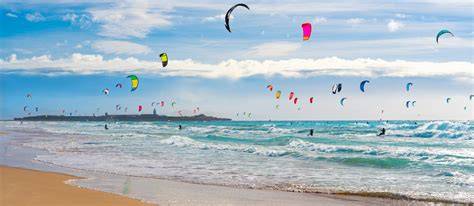
Tarifa è una delle destinazioni europee ikoniche per gli amanti degli sport acquatici. Sin dall'inizio degli anni ottanta, con gli arrivi dei primi furgoni di windsurfisti disposti ad esplorare questo incredibile tratto di costa, Tarifa ha trasformato il paesino di pescatori in un attrezzatissimo centro, pur mantenendo intatto il carattere selvaggio delle sue spiagge. Le condizioni qui sono perfette: spiagge amplissime, vento immancabile, baia poco profonda adatta a tutti i livelli d'abilità, atmosfera rilassata e temperature fantastiche in ogni periodo dell'anno. Oltre al windsurf è possibile praticare kite, SUP e surf da onda, o semplicemente godersi la vita in spiaggia all’ombra della grande duna di Punta Paloma, con l'incredibile vista della costa del Marocco all'orizzonte.
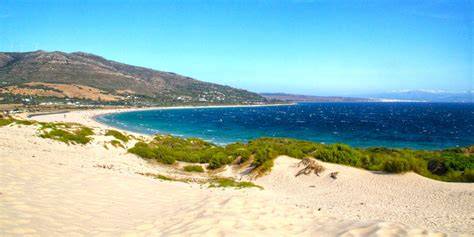
La Costa de la Luz - la costa che va da Tarifa al confine portoghese - va in letargo per gran parte dell’estate. Le onde arrivano con ritardo e i groundswells sono rari. Questo cambia verso la fine di settembre, quando le grandi tempeste atlantiche inviano buona action verso la bocca del Mediterraneo tramite Tarifa. L’inverno rimane la stagione più intensa, ma le finestre migliori per noi sono la metà di fall e la metà di primavera, con condizioni 2-6 piedi che si adattano bene a chi è alle prime armi o agli intermedi. Tarifa è la porta ideale per iniziare, imparare e migliorare, grazie a una combinazione di spiagge lunghe, venti costanti e una comunità appassionata.
Note pratiche e consigli
Se vieni per surfare e non vuoi restare in uno dei campeggi dotati di centro noleggio, allora la macchina sarà indispensabile. Le spiagge migliori si trovano quasi tutte ad una certa distanza dal centro abitato, ed i servizi di autobus sono relativamente poco frequenti. Portatevi una muta, anche in pieno agosto. A causa delle correnti atlantiche e della spesso alta temperatura esterna, l'acqua risulta quanto meno fresca. In estate, una shorty o una long john da 2/3 mm è ideale. La crema solare è obbligatoria, così come lo spray antizanzare.
Come arrivare Tarifa è raggiungibile volando su Malaga, Siviglia o Jerez de la Frontera. E' disponibile un servizio d'autobus interurbani abbastanza frequente ed economico che collega questi centri e Tarifa. Per chi viaggia in macchina, se si viene da Siviglia bisogna percorrere la E5/A4 in direzione Algeciras; se partite da Malaga seguite la E15/A7 sempre verso Algeciras e proseguite una ventina di minuti dopo questa città. Tarifa, in Andalusia, è una località famosa per il windsurf, il kitesurf, e gli sport acquatici in generale; da sempre, è un luogo per quelli che sono alla ricerca di una vacanza alternativa.
Meta e chiusura
Tarifa è uno di quei luoghi dove surf, vento e paesaggio si integrano in un’esperienza unica. La zona offre una varietà di spot per diversi livelli, scuole affidabili e una cultura del mare che invita a vivere ogni giorno all’aperto, anche quando il vento è forte o le onde sono impegnative. Surfin’ Tarifa e altre scuole locali si impegnano a fornire lezioni sicure, divertenti e adatte a ogni livello di abilità, accompagnando i principianti passo dopo passo verso il primo standing sulle onde.